On the Shoulders of Giants
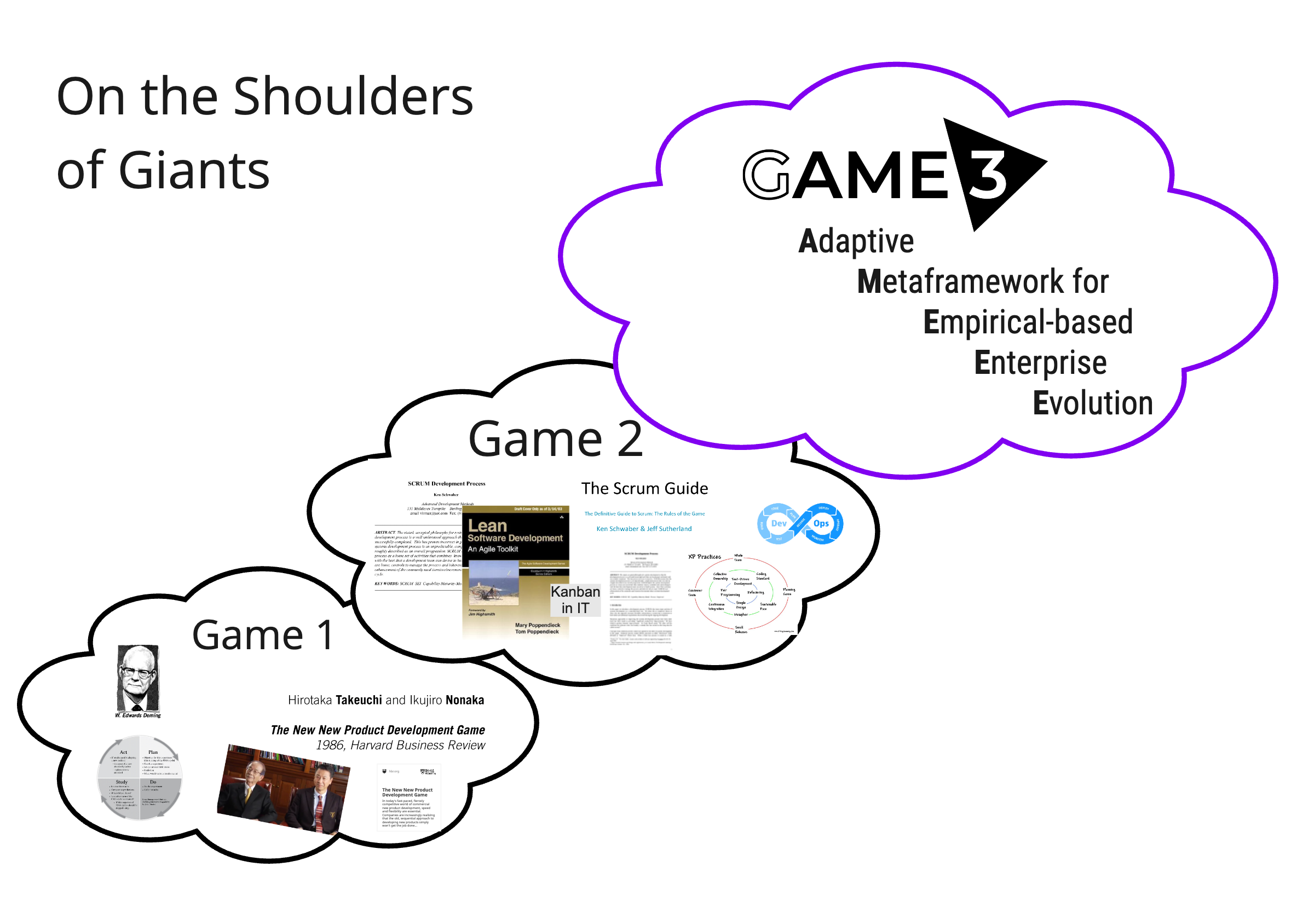
AME3 is built upon the foundational work of numerous methodologies and frameworks in Agile, Lean, and enterprise transformation. The visual above shows how AME3 synthesizes insights from established approaches including Scrum, Lean, Wardley Mapping, and many others to create a comprehensive enterprise evolution framework. This is evolution in action, a fundamental concept behind AME3 and one of the core Strategic Doctrines an enterprise should focus on.
Rather than replacing these proven methods, AME3 integrates their core principles while addressing the unique challenges of large-scale organizational transformation. From Scrum comes the power of self-organizing teams, clear leadership, and the focus on done work. From Kanban and Lean, the focus on flow, limiting work in progress, and eliminating waste. From Large-Scale Scrum, the lesson on aligning multiple teams toward shared goals. From Wardley Mapping, the insight that agility itself should not be the primary optimization goal. Instead, an enterprise needs to focus on the evolution of its products, services, and organization.
AME3 weaves these influences together into a coherent system designed for entire enterprises, not just individual teams. The AME3 Rules alone are not enough. This is by design. The Rules define the minimum structure. The methods and practices you choose fill the space between. Enterprises should adopt complementary methods and frameworks such as those mentioned above. The choice should align with the evolutionary stages of the product and organization, and with the particular Ambitions being pursued.
Some of these frameworks and methods may have different rules and recommendations. Scrum works in fixed timeboxes, Kanban optimizes for continuous flow. LeSS requires one Product Owner for all Teams, Scrum@Scale distributes ownership. Kanban says start where you are, while LeSS and Scrum require radical structural change. These conflicts are real, but the combined use still outweighs the inconsistencies. The Rules of AME3 support easy mapping and integration with other frameworks. Unlike prescriptive scaling frameworks, AME3 gives organizations the flexibility to steadily adapt. In cases of discrepancy, Empirical Control resolves the conflict through evidence, not dogma.