Arena
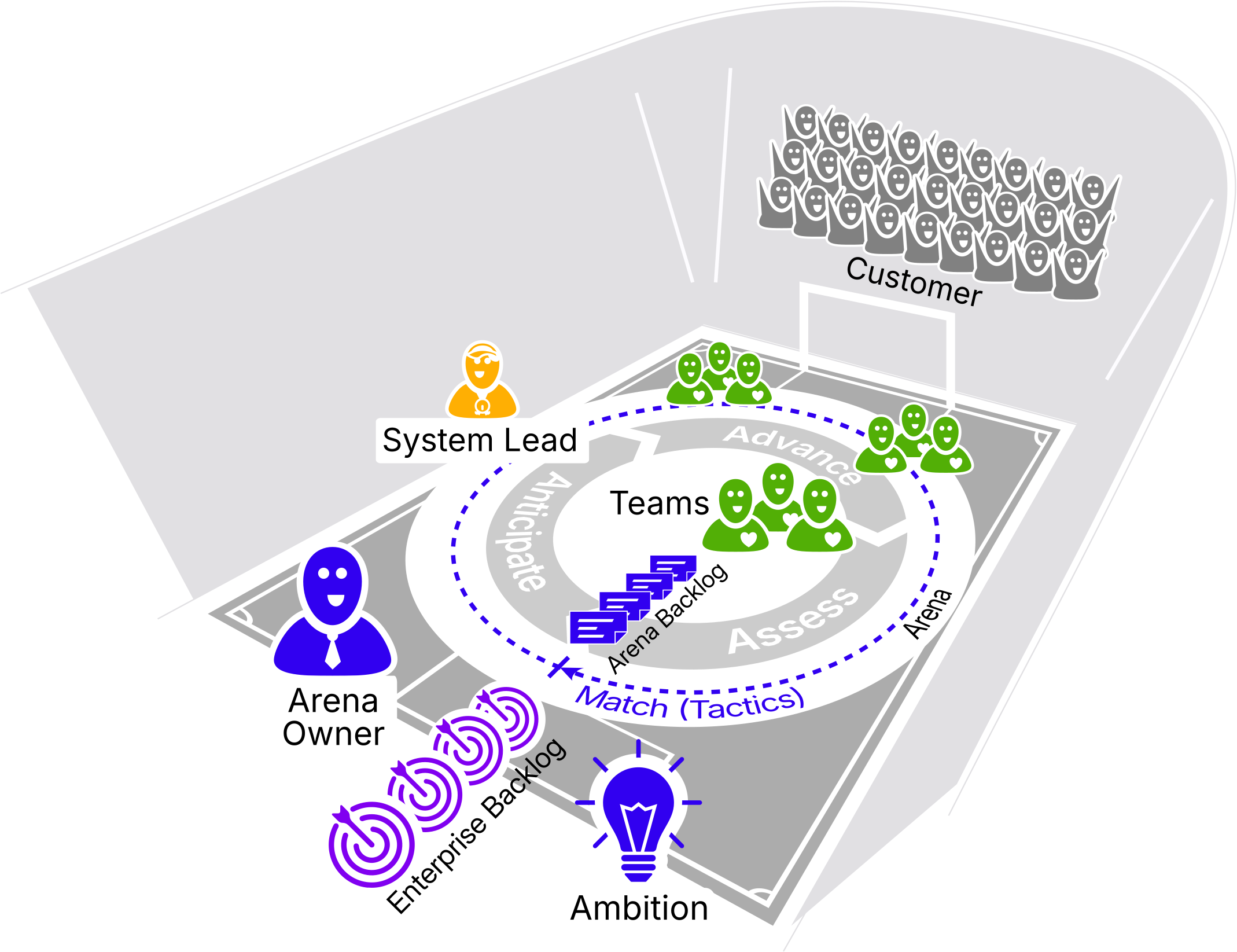
Think of a football club. There is a squad with a home stadium. The stadium is where the team plays and exercises. The squad has everything it needs to compete: players, a coaching staff, physiotherapists, analysts, and a club president who sets the direction. Nobody outside the club tells them how to play their game. They choose their own tactics, develop their own style, and adapt to every opponent.
An Arena is a highly independent organizational unit within an Enterprise dedicated to a specific Ambition. It contains a complete work system with Teams, Arena Owner, and System Lead.
The word “highly independent” is deliberate. An Arena is not a department that depends on other departments for every decision. It contains everything necessary to deliver and evolve its Arena Product. Teams do the work. The Arena Owner steers toward the Ambition. The System Lead builds effective methods and develops people. Together, they form a self-contained unit that can optimize for its own results without waiting for approval from elsewhere.
This independence mirrors the Total Football principle: the squad on the pitch can self-organize because it contains all the skills it needs. When a defender pushes forward, a midfielder covers. The system self-heals. An Arena works the same way. When a Team encounters an obstacle, other Teams, the Arena Owner, and the System Lead are right there, not three management layers away.
The independence is not absolute. An Arena operates within the constraints of its Ambition, which is set in collaboration with the Enterprise. It shares the Enterprise Product with other Arenas. But within those boundaries, it has the freedom to choose its methods, structure its Teams, and evolve its Arena Product at its own pace. How to design these boundaries well is covered in Slicing the Organization and Slicing the Product.