Enterprise
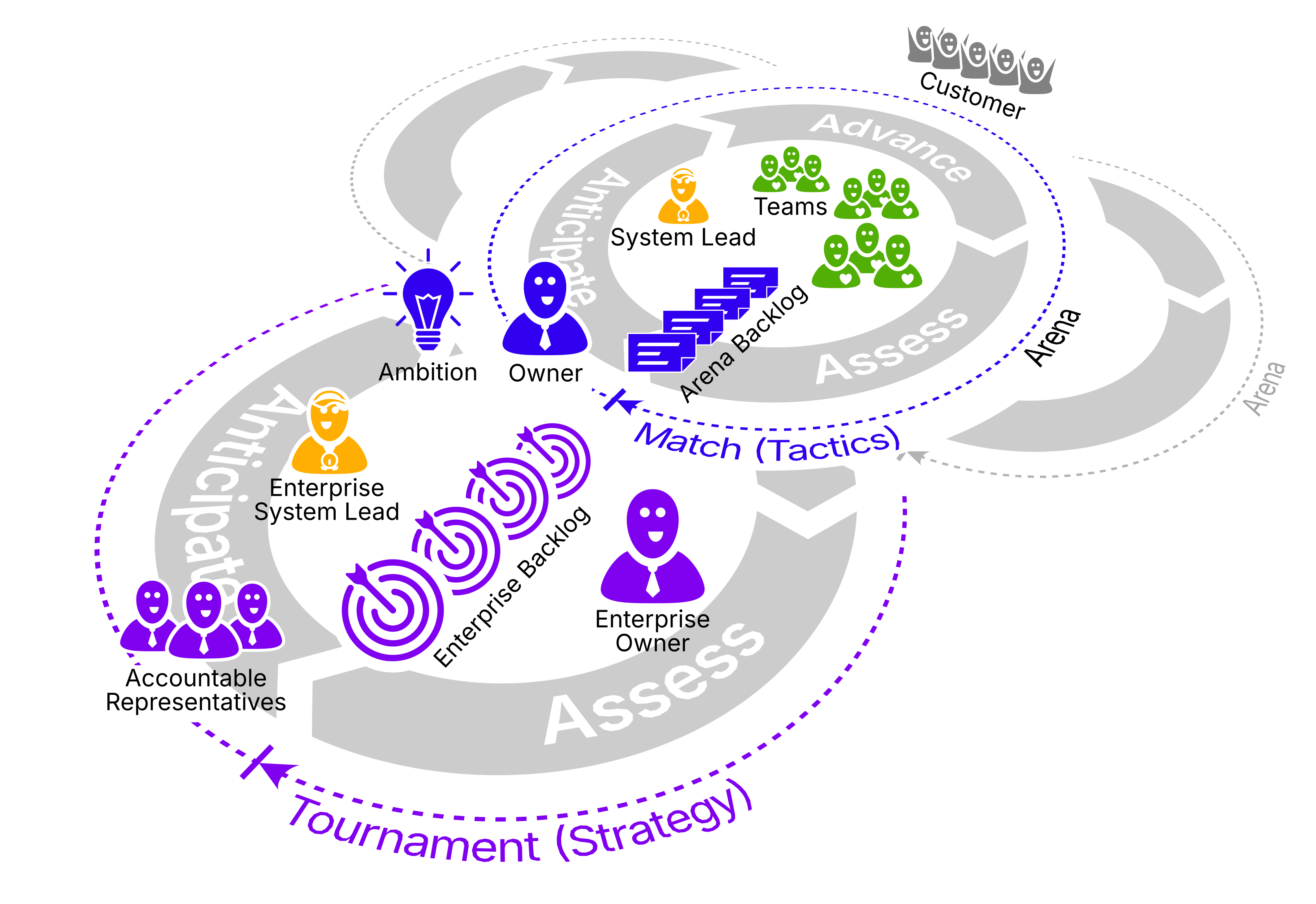
A small football club might have a single squad competing in one league. Everything revolves around them. But as the club grows, it develops more: a women’s squad, a youth academy, a basketball division, maybe a sports academy for talent development. Each of these operates as its own unit with its own coaches, players, and goals. The club provides the shared infrastructure: the brand, the finances, the strategic direction. But each unit competes in its own league and optimizes for its own results.
In AME3, the club is the Enterprise. Each unit is an Arena.
- The Enterprise provides resources to support an Arena.
- An Enterprise may encompass multiple Arenas.
- If the Enterprise operates other business areas with products and services outside the AME3 framework, it ensures these do not interfere with the independence of the Arenas.
- The boundaries of an Enterprise are defined by its Leadership Functions, Artifacts, and Constraints.
The relationship between Enterprise and Arenas is designed for independence. Each Arena can optimize for its own Arena Product without being blocked by decisions in other parts of the organization. This is not organizational isolation. It is deliberate system design that minimizes dependencies between units, so that each Arena can move at the speed its market demands.
Most enterprises do not adopt AME3 across the entire company at once. Some divisions may continue operating with traditional structures. The independence rule ensures that these legacy structures do not pull Arenas back into the old patterns of cross-departmental dependencies and approval chains. The Playbook chapter Improve the Play of the Old Game addresses how to work with parts of the organization that have not yet adopted AME3.