The AME3 Rules
A good game needs exactly the right number of rules. Too many rules make the game rigid, predictable, and boring. The spectators leave. Too few rules create chaos, frustrating for players and spectators alike. The best games in the world have rules that are well-calibrated: just enough structure to enable dynamic play.
“Playing football is very simple, but playing simple football is the hardest thing there is.” (Johan Cruyff)
Creating a lean and flexible organization is simple. Leading and working in one is the hardest thing there is.
In the 1970s, Dutch football revolutionized the sport with an approach called Total Football. Developed by Rinus Michels at Ajax Amsterdam and embodied by Johan Cruyff on the pitch, Total Football broke with every convention. No outfield player was fixed to a position. A defender could surge forward into attack while a midfielder dropped to cover. The function persisted (someone was always the forward), but the person filling that function constantly changed. The system self-healed.
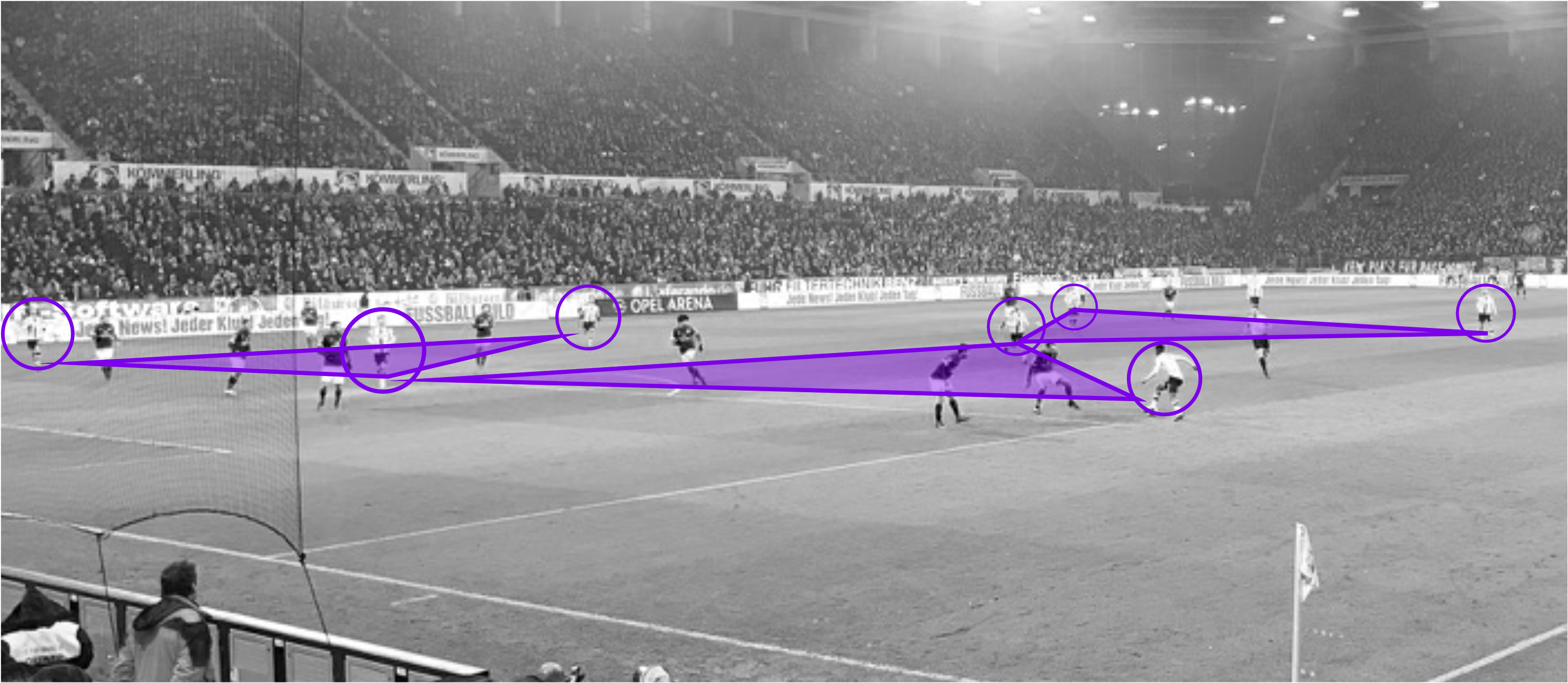
Players organized themselves in triangles, ensuring that the ball carrier always had at least two passing options. As the ball moved, triangles dissolved and reformed. No coach could choreograph every movement. Players had to understand the principles and decide in real time.
This was not just a tactic. It was a philosophy of organization, a strategic doctrine: simple rules, complex behavior. Most football before Total Football worked like a traditional hierarchy. Defenders defended their territory. Forwards attacked. Everyone stayed in their lane. Total Football proposed something radically different: define functions, not fixed positions. Trust the players to self-organize within minimal but sufficient rules.
That is what AME3 Rules aim for.
| Doctrine | Philosophy | Enterprise parallel |
|---|---|---|
| Catenaccio (Italy) | Defend deep, concede nothing, rigid roles | Departments defend their territory, rigid hierarchies |
| Route One (England) | Get the ball forward fast, bypass midfield | Project management bypassing line organization |
| Tiki-Taka (Barcelona) | Possession as control, defined zones | Controlled handoffs, defined process zones |
| Total Football (Netherlands) | Systemic fluidity, collective attack and defense | AME3: functions, not fixed positions. Self-organizing. |
| Gegenpressing (Germany) | Intense pressing the moment you lose the ball | Build on AME3 and create your own operational model. |
An enterprise is not a football club. But they share something fundamental: both are groups of individuals who choose to organize, who want to succeed, and who perform best when they find meaning in what they do. AME3 takes these principles to the enterprise.
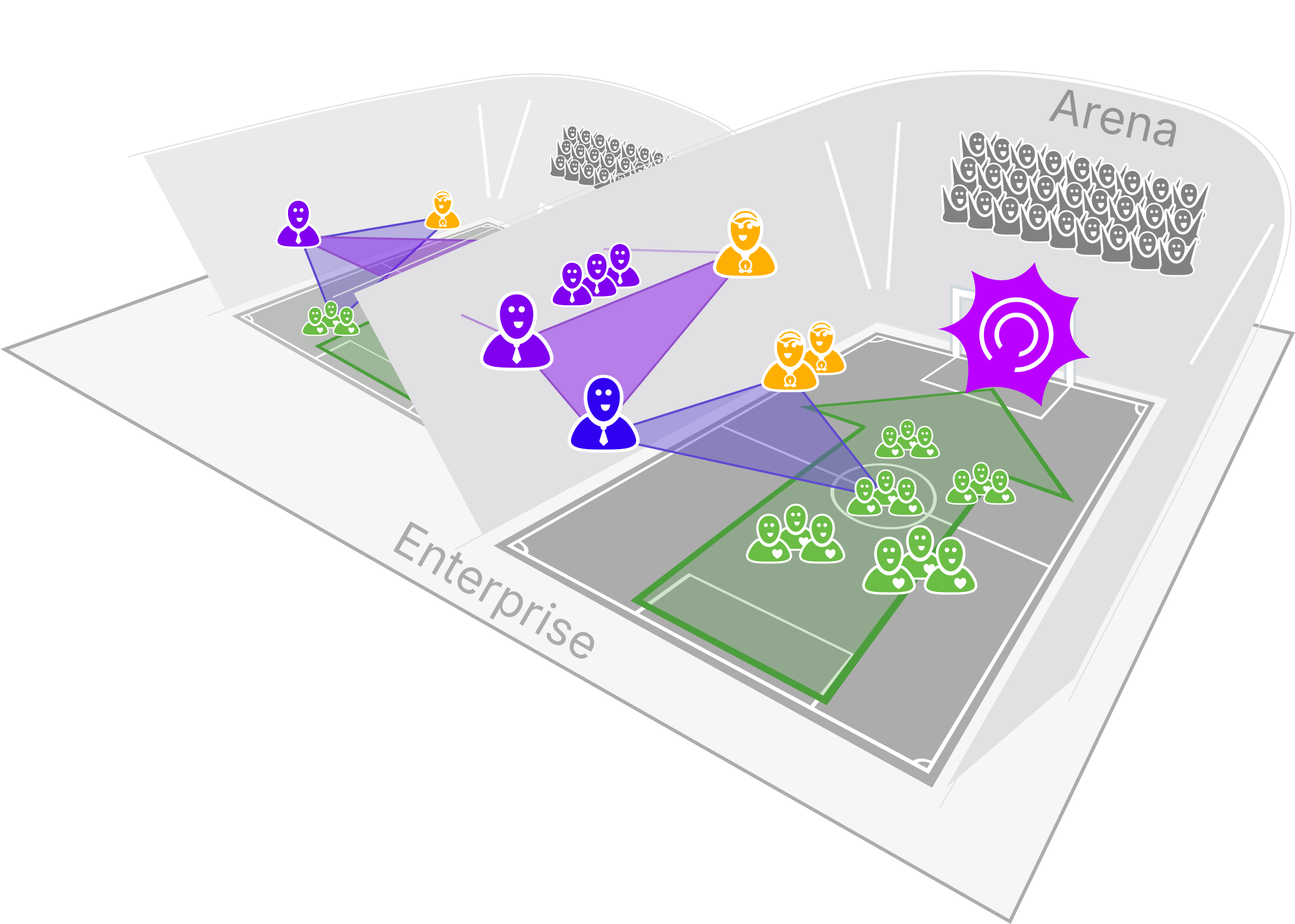
The AME3 Rules translate this philosophy into practice. They define the fundamental structure for an Enterprise implementing AME3 across Leadership, Strategy, and organizational design. Distilled from decades of experience, they provide the minimal yet sufficient set of rules for an enterprise to adapt its products, services, and organization to changing markets using empirical evidence. Just enough structure to play a good game while choosing your own tactics on the field.
Purpose of the Rules
The AME3 Rules serve three purposes.
First, they create a common language. When everyone in an Enterprise shares the same vocabulary for Arenas, Matches, Tournaments, and leadership functions, misunderstandings drop and alignment increases. The rules are not meant to rename people or positions. They provide a reference frame: which existing role is closest to which function, where are gaps, and where has the organization accumulated structures that no longer serve it.
Second, they work as a checklist. Lay the AME3 Rules over your organization and observe what is missing, what is too much, and where friction lives. Many organizations discover they have too many layers, too many roles, and too many rules that nobody can remove. The AME3 Rules are deliberately few so that the real question becomes visible: what else do we actually need?
Third, they enable integration with other methods. AME3 deliberately keeps its rules to a minimum, leaving room for frameworks like Scrum, LeSS, LeSS Huge, Lean, Kanban, Wardley Mapping, or Cynefin. The choice should align with the evolutionary stages of the product and organization and the particular Ambitions. Although some frameworks may have different rules and recommendations, the combined use outweighs the inconsistencies. The Strategy and Tactics section in Empirical Control illustrates this in practice.